Research Interests
Queer folx. Food. Rhetoric. My research develops along two intersecting trajectories: rat rhetorics and queer food communities. Together, these projects examine how marginal figures and everyday practices illuminate the material and affective dimensions of rhetoric.
Rat rhetorics investigates how the rat functions as a symbolic and discursive figure across literature, urban space, and political rhetoric. In the Anglo imagination, rats have long been cast as vermin—disease-bearing, hyper-reproductive, morally suspect. Yet their persistence in nineteenth-century British literature and contemporary urban discourse reveals less about the animal itself than about human anxieties surrounding class, race, contagion, labor, and the boundaries of the human. Drawing on rhetorical theory, affect studies, and critical animal studies, I trace how the rat circulates as a figure of abjection and governance, and I examine how queering this figure unsettles liberal humanist ideals of order, purity, and disposability.
Alongside this work, I theorize queer food communities as sites of material rhetoric and counterpublic formation. I analyze how shared meals, potlucks, cookbooks, and informal food networks function as infrastructures of belonging that exceed heteronormative and privatized models of kinship. Drawing on rhetorical circulation, queer theory, and critical food studies, I argue that food practices operate as embodied arguments about dignity, survival, and collective world-making. Here, food is not metaphor but medium: a material practice through which identity, solidarity, and refusal are enacted.
Across both trajectories, I am concerned with how rhetoric organizes marginal life. Whether in the reviled figure of the rat or in the communal act of sharing food, I examine how abjection is rhetorically produced—and how those marked as excessive, unsanitary, or out-of-place nonetheless craft durable forms of survival and belonging. My work contributes to rhetoric and writing studies by expanding the field’s understanding of materiality, circulation, and the affective infrastructures that sustain community under conditions of constraint.
Research
My service work bridges academic, cultural, and community institutions, reflecting my commitment to rhetoric as a public and civic practice.
I serve in leadership and development roles with the Charm City Fringe Festival, where my work includes board service, fundraising strategy, grant writing, and communications. In this capacity, I contribute to sustaining Baltimore’s independent arts ecosystem and expanding access to experimental performance spaces. This engagement reflects my broader interest in public humanities, cultural circulation, and the infrastructures that support creative communities.
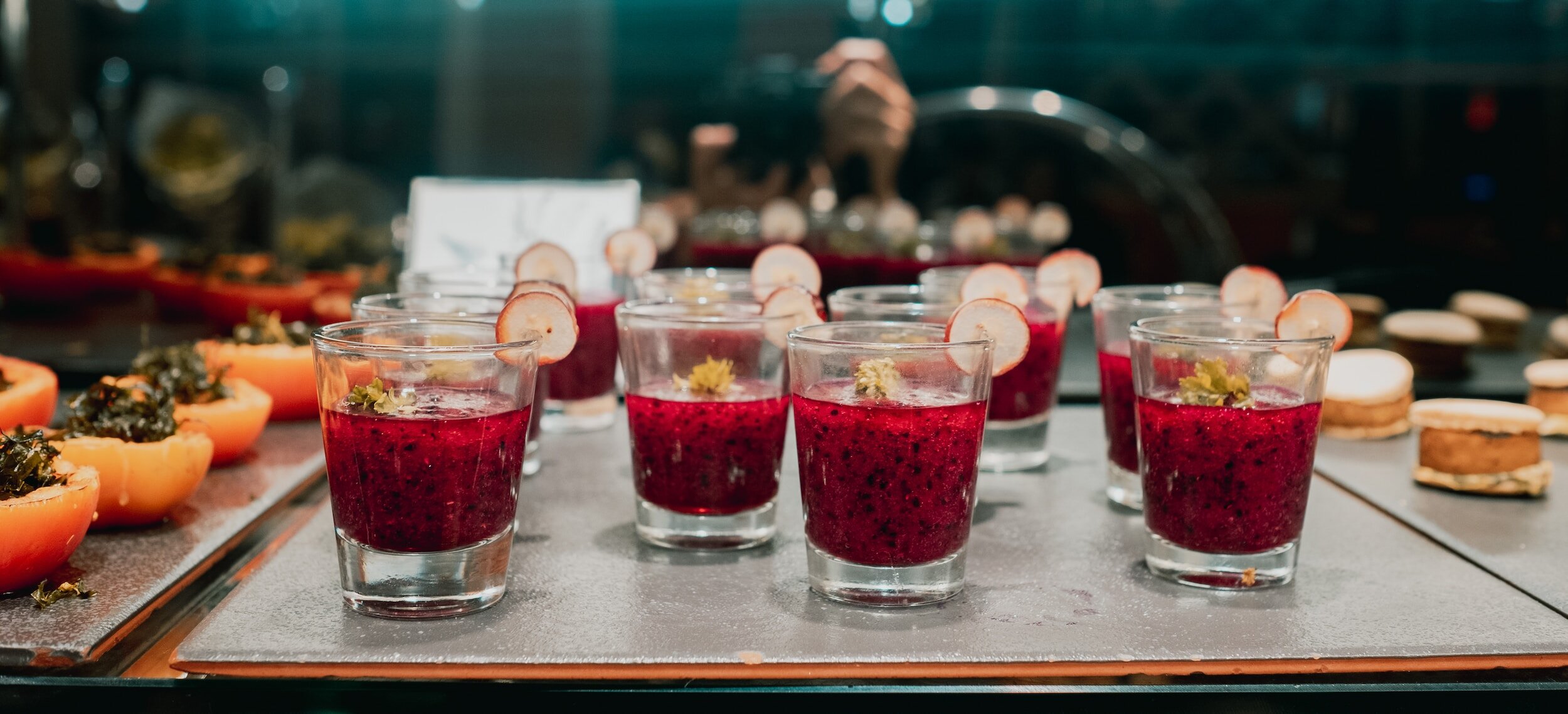
Why Do We Brunch?
More Than a Meal: Brunch as a Cultural Ritual of Recuperation, Performance, and Belonging
Brunch, that hybrid of breakfast and lunch typically consumed between 10 a.m. and 2 p.m. on weekends, is often dismissed as little more than a hangover cure or a social indulgence. Avocado toast, bottomless mimosas, and eggs Benedict populate the table, accompanied by laughter, gossip, and perhaps the subtle hum of regret from the night before. But to reduce brunch to the domain of mere recovery or pleasure is to miss its richer, more complex role in contemporary life. Brunch is a cultural performance, a social ritual, and a form of soft resistance to the rhythms of capitalist time. It’s not just about food—it’s about identity, labor, and the negotiation of leisure in a world increasingly hostile to downtime.
A Weekly Reclamation of Time
Brunch’s popularity exploded in late capitalist societies alongside the rise of service-oriented labor and the gig economy. As the traditional Monday-to-Friday, 9-to-5 work week has eroded for many, brunch represents one of the few stable temporal rituals still available to younger generations. The Saturday night out and the Sunday morning brunch go hand-in-hand, but their pairing isn’t just about hedonism—it’s about carving out a weekly rhythm amid the chaos of irregular schedules, overwork, and economic precarity.
Time scholars have pointed out that neoliberalism compresses time, pushing individuals to optimize every moment—workouts must be productive, evenings must be networking opportunities, even sleep must be tracked for efficiency. In this context, brunch offers an almost defiant pause. It’s slow. It’s social. It lingers. One doesn’t “grab brunch”; one does brunch, often over hours. In this way, brunch functions as temporal resistance: a socially sanctioned moment to refuse the ticking clock and live, briefly, without urgency.
Brunch as Performance and Curation
To brunch is also to perform—of taste, class, queerness, whiteness, or urbanity, depending on the context. For many, brunch is a curated aesthetic experience. The space is often Instagrammable, the food carefully plated, and the vibe somewhere between cozy and cosmopolitan. Participation in brunch is not merely about consumption, but about being seen consuming the right thing, in the right place, with the right people.
For marginalized communities—particularly queer folks—brunch has historically served as a safer and softer public space for congregation, flirtation, and kinship-building. Drag brunches, for example, transform the event into a queer performance of joy, protest, and camp. The performative layers of brunch—what one wears, orders, documents, and shares—become ways of crafting and asserting identity, both individually and collectively.
A Space Between Work and Rest
Brunch occupies a liminal space between rest and labor. While it is typically associated with leisure, it often conceals layers of emotional and affective labor. The hosting, the storytelling, the planning, even the anticipation all involve a kind of low-stakes performance that requires social energy. For some, particularly women and queer people, brunch provides an outlet for emotional connection and processing—what Sara Ahmed might call the labor of “making room” for others in both affective and literal senses.
And let’s not forget those who make brunch possible: the restaurant workers who must labor during peak weekend hours to meet the demand of those seeking temporary reprieve. Brunch, then, is also a site of contradiction—leisure for some is labor for others. In recognizing this, one can begin to see brunch not only as a ritual of consumption but as a node in larger systems of labor, class, and visibility.
More Than a Mimosa
Ultimately, the question “Why do we brunch?” is less about what we eat and more about what we seek. Connection. Pause. Identity. Community. To brunch is to briefly reorient the social world toward pleasure, toward chosen family, toward slowness, toward self-presentation. While it may indeed help nurse the effects of the night before, its function is more restorative than recuperative. Brunch is a cultural salve—a moment in which we try, through ritual and aesthetics, to rebalance the tensions of contemporary life.
So yes, we brunch for the pancakes and the poached eggs—but also for the fleeting sense of togetherness and the illusion, however temporary, of a life lived on our own terms..
The Community-building Connection, or Why Don’t We Brunch (Together)?
Brunch, Class, and the Illusion of Queer Community Through Consumption
While brunch has often been romanticized as a site of joy, connection, and identity performance—particularly within liberal and queer social spheres—this celebratory narrative obscures a deeper and more unsettling truth: food rituals like brunch can just as easily become mechanisms of exclusion as they are of inclusion. For all its aspirational aesthetics and surface-level sense of belonging, brunch, as practiced in many urban spaces, often reproduces the very class distinctions and economic hierarchies it pretends to transcend. Far from being a unifying communal experience, brunch can function as a soft barrier, one that alienates rather than connects, particularly within queer communities that are themselves fractured along lines of race, class, and access.
Queerness, Class, and the Myth of the Table
There is a longstanding impulse to center food in community-building work, especially within queer spaces: the potluck, the dinner party, the drag brunch. Food is love, food is culture, food is resistance. But food is also deeply structured by material access. When we say “let’s do brunch,” who do we mean by “we”? The $19 eggs Florentine and $12 bottomless add-on aren’t neutral indulgences—they are markers of class performance, signaling who belongs in the space and who can afford not just the food, but the time, dress, and comportment it demands.
Within queer spaces, especially urban queer enclaves often idealized as havens of diversity, food rituals like brunch frequently reinforce homonormative class boundaries. Those with salaried incomes, flexible schedules, and social capital gather at curated venues, consuming both food and each other in public performances of ease. But what of the working-class queers? The unhoused or housing-insecure? The servers and kitchen staff who make the experience possible? Their absence from the table isn’t accidental—it’s designed into the ritual.
The Performance of Solidarity
Brunch, as a food ritual, offers a fantasy of community: we gather, we toast, we laugh, we post a photo with the caption “chosen family.” But such performances of queer kinship often flatten difference and avoid the hard labor of actual solidarity. The brunch table is a stage, not a meeting hall. It asks us to show up styled and curated, not vulnerable and agitating.
This is particularly problematic in a time when queer communities are under growing economic and political pressure. Rent continues to climb, mutual aid networks are stretched thin, and the pandemic has laid bare the class divides within the LGBTQ+ world. Yet the image of the carefree queer brunch-goer persists, masking the material precarity of many in the community. The ritual tells us we are connected, but what it often does is paper over deep class divisions with hollandaise and hashtags.
The Politics of Space and Visibility
The spaces in which brunch happens are themselves implicated in gentrification and displacement. Trendy brunch spots often open in neighborhoods undergoing rapid transformation, where working-class people—often people of color—are pushed out while their cultural signifiers are absorbed into “new” culinary experiences for wealthier patrons. A mural of queer icons may adorn the wall, a rainbow flag may fly above the door, but the pricing and ambiance speak clearly: this is not a space for all queers.
The queer community has long understood the importance of space—who has it, who makes it, and who is welcome in it. Brunch, despite its benign image, becomes yet another spatial ritual that organizes and polices belonging. It is a velvet rope masquerading as a picnic blanket.
Food Rituals Without Reconciliation
If we are to think critically about food rituals as community-building practices, we must ask: who gets fed, and who gets seen? The liberal celebration of brunch as a symbol of queer joy and connection too often ignores how those rituals are structured by capitalism, class, and disposability. Brunch cannot be both a $60 indulgence and a genuine act of solidarity. It cannot be both spectacle and sanctuary.
Queer kinship built on consumer rituals is not kinship at all—it’s branding. Real community requires shared labor, shared struggle, and practices that resist commodification. It looks more like a volunteer-run food pantry, a pay-what-you-can café, a porch potluck with mismatched chairs. It sounds more like hard conversations about classism within queer friend groups than coordinated Yelp reviews.
Toward Food Rituals that Matter
To brunch is easy. To build a table where everyone can eat, where no one feels surveilled or priced out—that is difficult, radical work. It demands a turn away from the curated performance of liberal inclusivity and toward a messier, more materially grounded solidarity. Not all food rituals build community. Some reinforce its impossibility.
If we are serious about queer liberation, we must look beyond the mimosa glass and into the kitchen—who’s working, who’s eating, and who’s not invited at all. Only then can we begin to craft rituals that nourish not only our bodies, but our collective future.
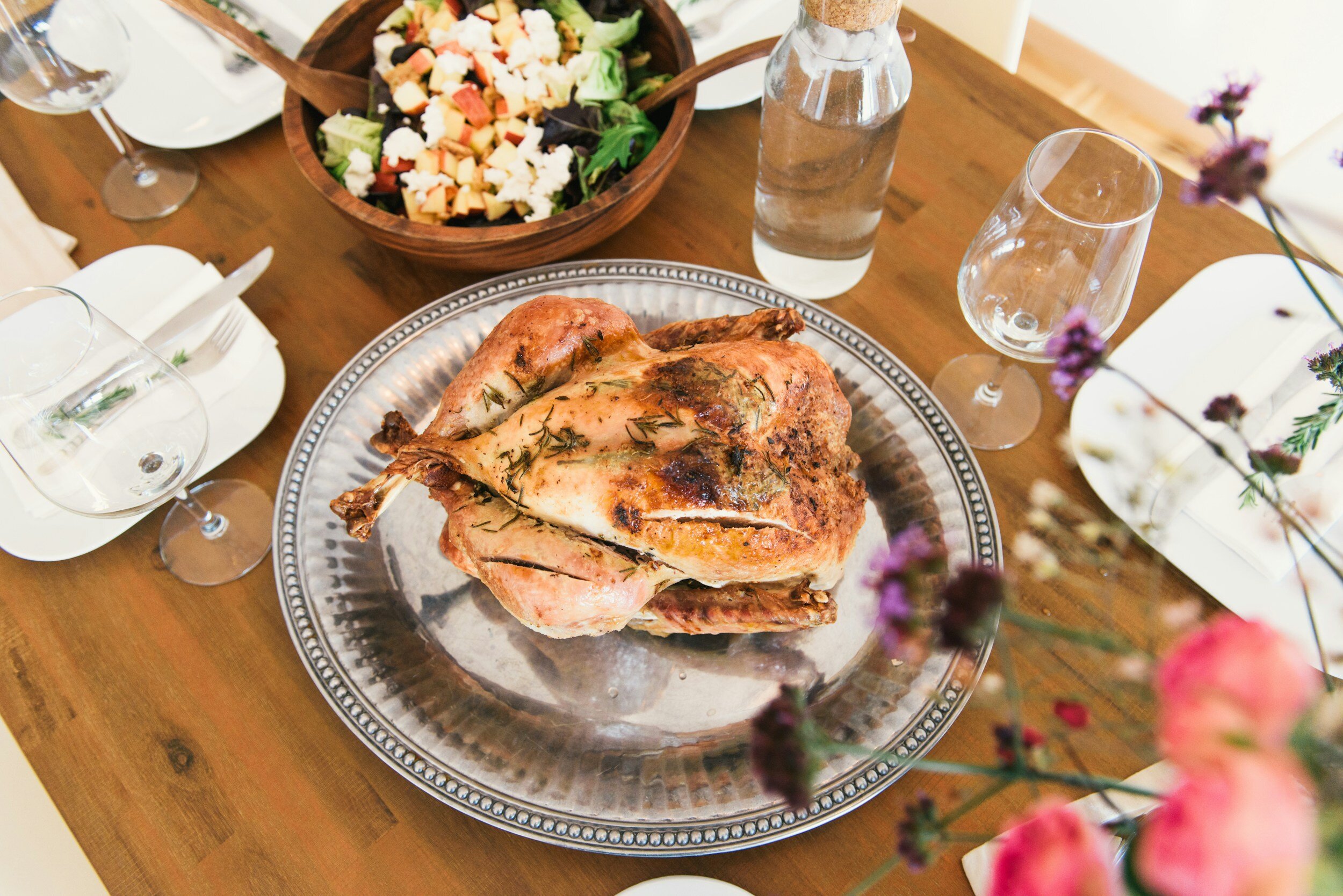
Why Do We Have Friendsgiving? (AKA Friendsgayving)
This has been on my mind a lot as it’s more less cheery than why we have brunch, though I want to argue no more or less important.